The Hidden Markups on Wireless Keyboards: A Sourcing Insider’s Guide
The Price of a Clutter-Free Desk
In today’s world of minimalist aesthetics and flexible work setups, a wireless keyboard isn’t a luxury—it’s a necessity. It cleans up your desk, offers positioning freedom, and completes a modern workspace. But as you shop around, a simple question often arises: why do some wireless keyboards from big-name brands cost a small fortune, while others seem suspiciously cheap?
The answer often lies not in the product’s quality, but in a long and costly journey from the factory to your desk. As insiders in the world of sourcing and manufacturing, we see this every day.
Decoding the Price Tag: The Journey of a Keyboard
The sleek wireless keyboard you see in a retail store has likely passed through many hands, with each step adding to the final cost. The typical cross-border retail path looks something like this:
- The Factory: Where the product is designed and manufactured.
- Brand & Importer: A brand buys from the factory, adding their own markup.
- Distributors & Wholesalers: These middlemen add their cut for logistics and storage.
- Retailers: The final store (online or physical) adds its own significant margin to cover marketing, rent, and profit.
By the time that keyboard reaches you, its price can be several times higher than the original factory cost. This doesn’t even account for the massive marketing budgets of major brands, a cost that is always passed on to the consumer.
How to Spot Real Value Like a Pro
So, how do you bypass the hype and find a high-quality product at a fair price? You need to start thinking like a professional buyer. Instead of focusing on the brand name, focus on the features that truly matter for a great typing experience.
- Key Technology: Look for keyboards with “X-structure” (also known as scissor-switch) keys. This is the same technology used in many premium laptops. It provides a stable, quiet, and comfortable keystroke that’s a significant upgrade from cheap membrane keyboards.
- Power Source: Is it powered by disposable batteries or a built-in rechargeable one? A rechargeable battery is not only more convenient and eco-friendly but is often a feature found in higher-end models.
- Build & Design: A quality keyboard should feel solid, not flimsy. A slim, ultra-thin profile made from durable ABS plastic indicates modern design and manufacturing.
- The Source: Look for products from OEM/ODM suppliers. These are the original factories that often produce items for the big brands. Buying from them directly can cut out multiple layers of middlemen and markups.
A Prime Example of Factory-Direct Quality
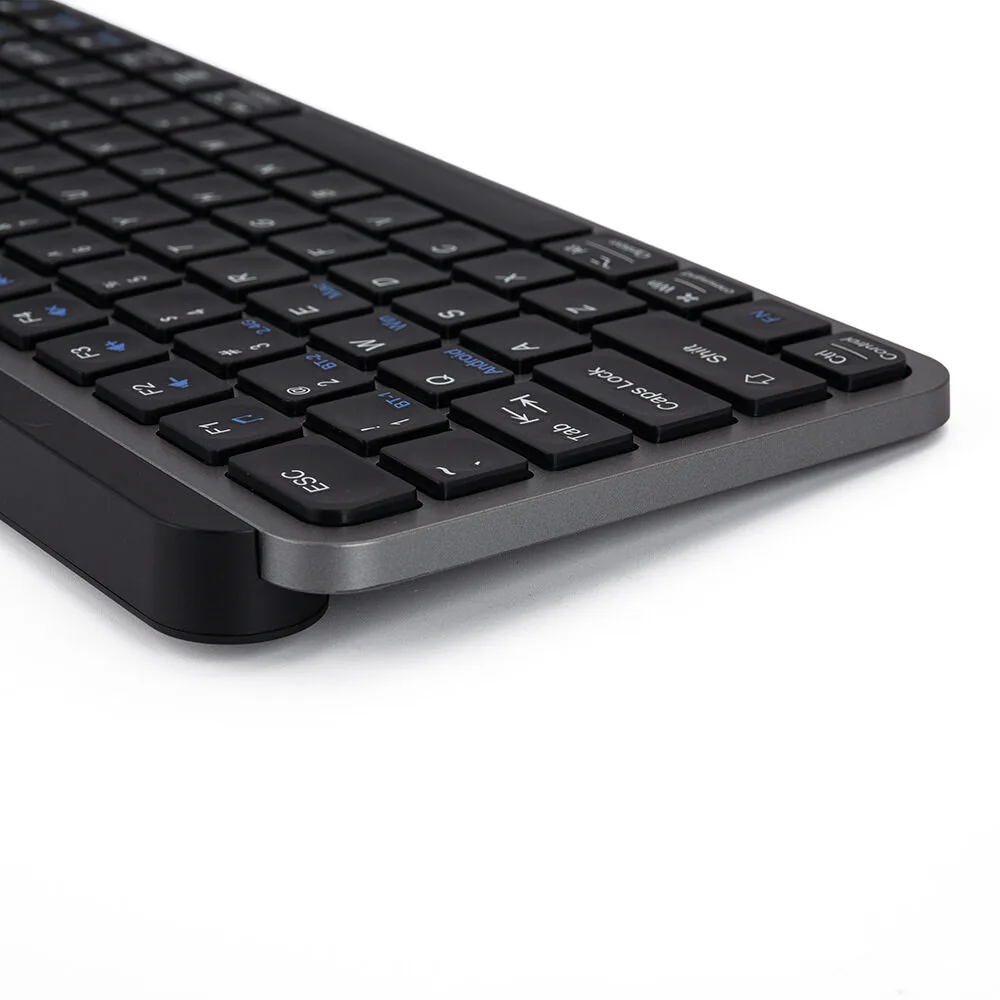
Finding a product that checks all these boxes can feel like a sourcing victory. That’s why we’re excited about this Ultra-Thin Wireless Bluetooth Keyboard. It’s a perfect case study in what to look for.
This keyboard delivers on all the key points a savvy buyer would seek:
- Premium Typing Feel: It features the coveted X-structure keys for a quiet and responsive experience.
- Cordless Convenience: It’s not just wireless; it has a built-in rechargeable battery, saving you the hassle and cost of disposables.
- Sleek, Modern Design: With an 18mm ultra-thin profile and a clean aesthetic, it elevates any workspace.
- Direct-from-Source Value: As an OEM/ODM product, it offers the features of a high-end keyboard, allowing you to access quality without paying for multiple layers of brand and retail markups.
Stop paying for brand logos and complex supply chains. By understanding what makes a great keyboard, you can make a smarter choice for your wallet and your workspace. If you’re ready to experience what premium, factory-direct quality feels like, check out the allwinOEM/ODM Ultra-Thin Wireless Keyboard. It’s time to get the quality you deserve at a price that makes sense.
Frequently Asked Questions
Retail prices usually reflect 3x-5x markups stacked across brand licensing, importers, distributors, and retail margins. Buying OEM/ODM direct from the factory removes most of these intermediary layers.
Most mechanical keyboard OEM/ODM programs start at 500 units per model, though MOQs vary by customization level, tooling requirements, and component sourcing.
Standard lead times run 25-35 days after sample approval, excluding tooling development for fully custom enclosures, which can add 2-4 weeks.
Buyer next step
Need custom keyboards or keycaps from a factory?
Send material, layout, quantity, packaging and timeline. AllwinKey will use it to prepare a practical RFQ discussion.
Member / sourcing checklist
Use the sourcing checklist before you register
Prepare MOQ, material, layout, packaging and sample questions before you contact the factory.
Open buyer sourcing checklist →Register as a buyer / member →
Buyer Q&A
Use this area for practical sourcing questions about MOQ, materials, layouts, samples, packaging, production schedule or OEM/ODM details.
No public sourcing questions yet. Be the first to ask a practical buyer question.